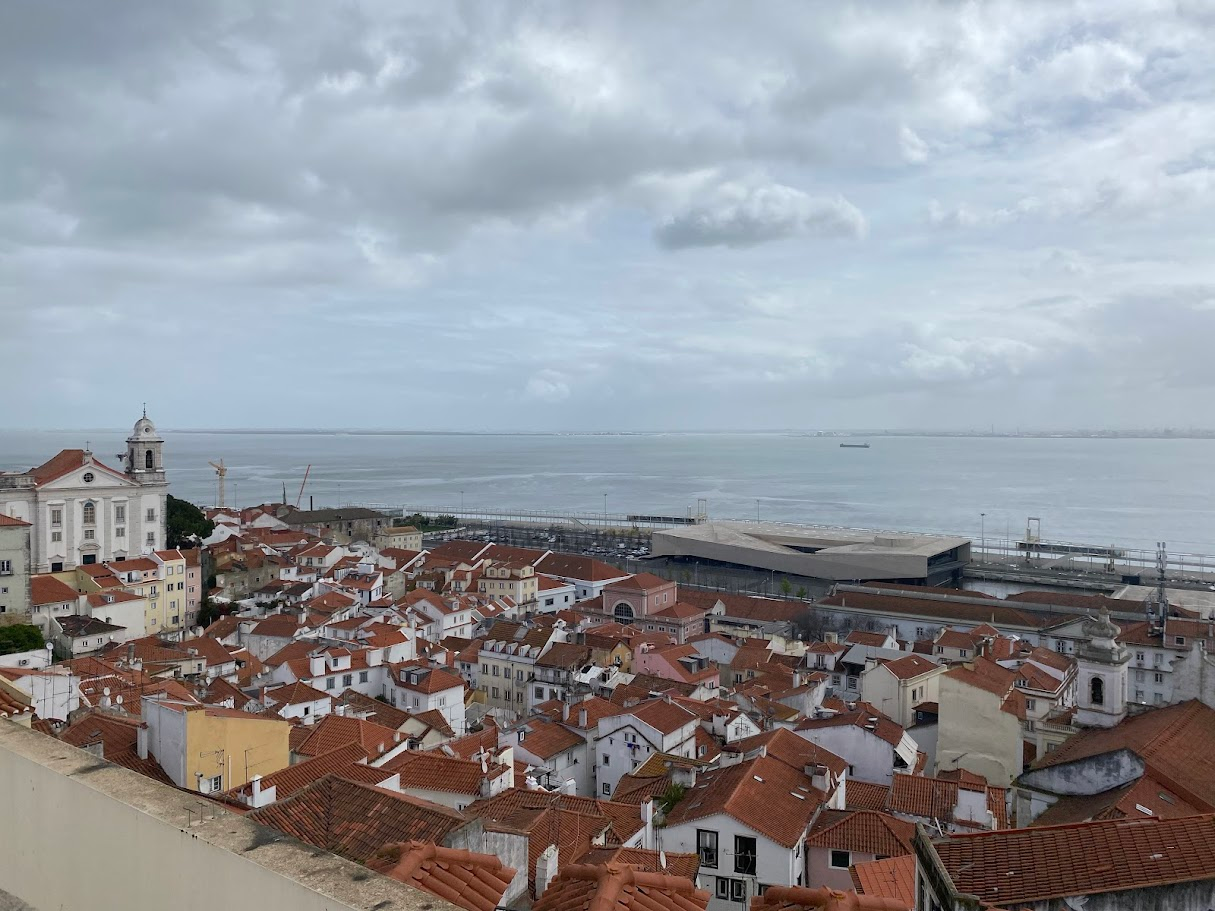
Lisbon doesn’t just sit on seven hills, it sways on them. The city hums quietly in the morning, then bursts alive by afternoon with its yellow trams, tiled facades, and the echo of footsteps on cobblestones that seem to tell their own stories. Every corner looks like it was designed for sunlight. Every stairway feels like it’s testing your endurance in exchange for a better view.
The charm of Lisbon is in its contradictions. It’s old yet restless, melancholic yet playful. Walk through Alfama and you’ll feel like you’ve stepped inside a memory. Laundry flutters above you. Locals lean out their windows to talk across narrow streets. Then, head to Belém and it’s grandeur all over again — the Monastery of Jerónimos standing tall and ornate, like it knows exactly how beautiful it is.
And then there’s the view from Miradouro da Senhora do Monte. The city spreads below you in terracotta tones that fade into the Tagus River. Stay long enough and the sunset turns the whole place gold, and you start to understand why the Portuguese have a word like “saudade.” It doesn’t translate neatly. It’s nostalgia, longing, beauty, and sadness all rolled into one. Lisbon wears it on its sleeve.
What really pulls you in, though, are the details. The tiny blue-and-white azulejos tiles that catch the morning light. The trams that rattle like they’ve been doing this forever. The sound of seagulls following the scent of the ocean breeze through the streets. Even the way the sidewalks shimmer — mosaics made of limestone, polished by centuries of feet.
For a city built on hills, Lisbon makes you slow down. You find yourself stopping at every viewpoint, losing track of time in hidden courtyards, or following the smell of fresh bread through winding alleys that don’t show up on maps. You might not find what you’re looking for, but Lisbon rewards you anyway.
A few places to anchor yourself: start at Praça do Comércio where the river meets the city, then climb up through Baixa toward Bairro Alto, where modern life sneaks into old stone walls. And don’t skip the LX Factory — a converted industrial space that’s now all books, art, and conversations that last too long.
Lisbon doesn’t shout to impress. It hums. It drifts. It waits for you to fall into step with it. And when you leave, it lingers — like a song you can’t quite get out of your head, soft and warm and just a little bit sad.