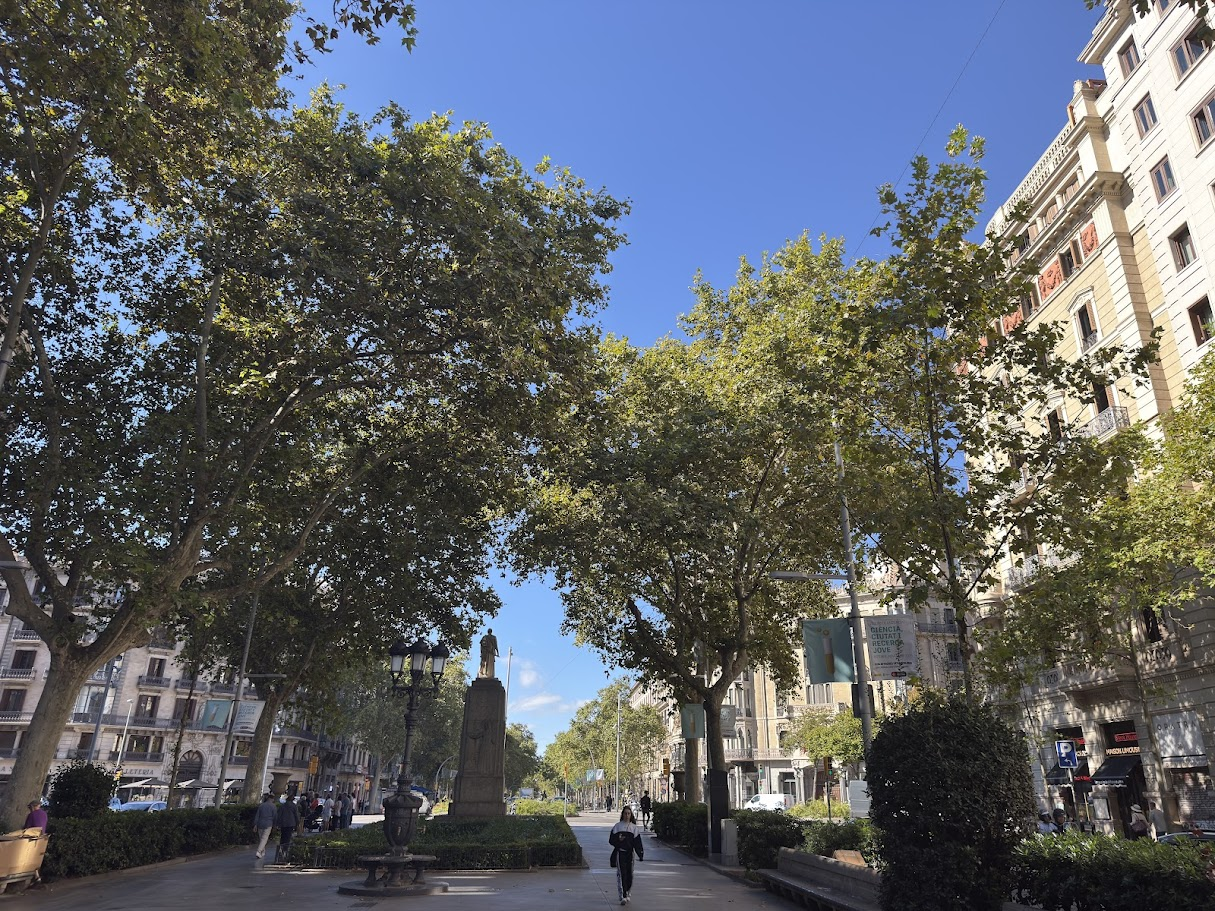
Barcelona is a city that doesn’t move at your pace. It pulls you into its rhythm and makes you adjust to it. Every street hums with life, every building feels designed to be looked at, and every turn opens to something unexpected. It’s a city that knows it’s beautiful and doesn’t apologize for it.
Most travelers start on La Rambla, but the truth is the real Barcelona exists just a few streets away. The Gothic Quarter, with its narrow passages and hidden courtyards, holds the soul of the city. Shadows fall across stone walls that have seen centuries of life. You walk through arches, stumble into quiet squares, and find yourself surrounded by walls so old they feel like memory itself. It’s a part of Barcelona that whispers more than it shouts.
A short walk brings you to the cathedral. Its spires climb sharply into the sky, and from the rooftop, the view stretches across the entire city to the sea. From up there, Barcelona looks layered and alive, modern buildings mixing with ancient rooftops. The hum of life below feels distant, but never gone.
Then there is Gaudí. His buildings do not look like anything else in Europe. The Sagrada Família feels less like a cathedral and more like a living organism made of stone. Every column curves like a tree trunk, every wall bends toward the light. Standing inside, you forget it has been under construction for over a century. It feels intentional, as if the building itself is teaching patience.
Park Güell is another version of that imagination turned physical. You climb a hill, and suddenly you are inside a dream. Colorful mosaics twist around organic shapes, lizards made of tile guard the stairways, and views of the sea spread out below. The air smells of pine and salt, and everything feels both strange and natural at once.
But Barcelona is not only about architecture. It’s about how people inhabit their space. You can feel it in the rhythm of the streets, in the sound of a musician playing under an archway, in the conversations drifting through open windows. Even sitting in a small neighborhood square feels alive, like you’ve joined a scene that’s been unfolding for centuries.
Walk toward the sea and you’ll find Barceloneta, where the old fishing neighborhood meets the beach. The light changes there, becoming softer as it bounces off the water. Locals walk barefoot on the sand, children chase waves, and the skyline stands behind you like a reminder that the city never stops. From the edge of the shore, you can look back and see the full personality of Barcelona—historic, creative, restless, and endlessly curious.
If you wander north, Gràcia feels like a different world within the city. Narrow streets open into small squares filled with plants and quiet chatter. It’s a neighborhood that feels more like a village, and it shows another side of Barcelona’s character: intimate, independent, and personal.
As night settles, the city glows. Light spills from balconies, the air grows warm, and music drifts from open doors. The architecture changes character after dark. The facades that seemed bold by day become delicate, almost secretive. Walking home through those streets feels like floating through a place that never truly sleeps.
Barcelona is more than a destination. It is a city that breathes. You don’t simply visit it—you enter into its pulse. The longer you stay, the more it feels like it’s watching you back, teaching you how to look at space, color, and time differently. And when you leave, you carry that rhythm with you, somewhere in the background of your own thoughts, like a melody that refuses to fade.